
Jade
Making everyday spaces safer for neurodivergent people
“There’s a moment a lot of people don’t think about. It’s that pause before walking into a public space.”
Jade is developing NeuroSafe Spaces, exploring how small, thoughtful changes can make everyday public environments feel safer and more accessible for neurodivergent people.
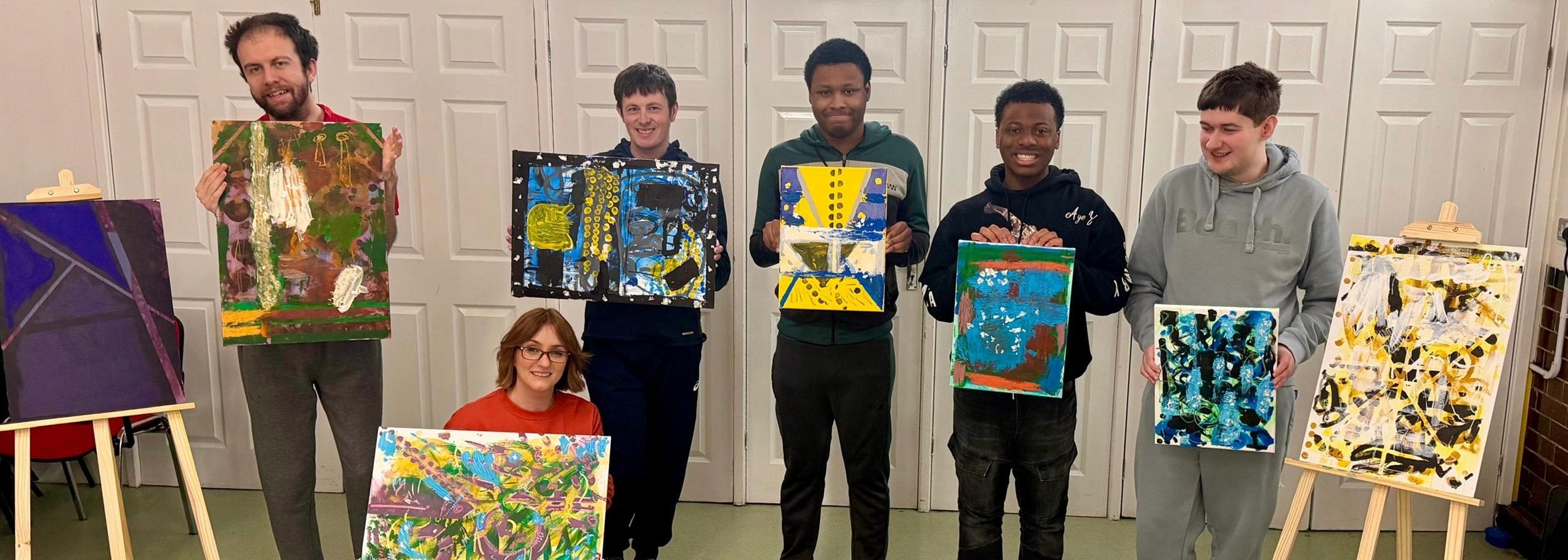
Midway through her MA in Creative Practice, @Jade Brown is developing NeuroSafe Spaces, a project exploring how everyday environments can feel safer and more accessible for neurodivergent people. We spoke to her about the thinking behind the work, how it’s growing through community, and why small, thoughtful changes can make a lasting difference.
Jade Brown
“There’s a moment a lot of people don’t think about.
It’s that pause before walking into a public space. For some, it passes unnoticed. For others, especially neurodivergent people, it can be the moment where everything feels uncertain.
Will this be too loud? Too busy? Will I be able to stay? What happens if I feel overwhelmed?
NeuroSafe Spaces began as a way of asking: what would it look like if people didn’t have to question whether they’d be okay in a space? What if that sense of safety was visible, understood, and quietly built into the environment before they even stepped inside?
Why this matters
Through my work at EPIC Social Care, supporting young adults with autism and learning disabilities, I’ve seen how much of a difference the right environment can make. Not just in specialist settings, where support is expected, but in everyday places, the ones that shape how connected someone feels to their community.
Because the reality is: many environments aren’t designed with neurodivergent experiences in mind.
And that can easily lead to isolation, not because people don’t want to be there, but because the risk of overwhelm feels too high.
What NeuroSafe Spaces looks like in practice
NeuroSafe Spaces is about changing that in a way that feels real, practical, and shared. Rather than expecting neurodivergent people to adapt, the project works to make small but meaningful shifts in society.
This might look like a visible sign in the window, a quiet awareness from staff, or access to simple tools that support emotional regulation. Nothing complicated. Just enough to say: you are welcome here, and we’ve thought about what you might need.
Growing through community
What’s been most powerful so far is how this has grown through community.
This hasn’t been built alone. I’ve connected with creative businesses, from glass artists to ceramics and tattoo studios, who don’t just want to be part of the network, but want to offer inclusive sessions so people can experience their work in a way that feels accessible.
There are also conversations happening with larger organisations, from housing associations to heritage sites, all exploring how NeuroSafe Spaces could exist within their environments.
This is where it starts to shift from being a project into something bigger. It becomes a network. A collection of places, people, and practices that are all quietly working towards the same thing: reducing the pressure someone might feel simply to exist in a space.
Creating environments where people don’t have to explain themselves before they are understood.
At the heart of it
At the heart of this is my creative practice.
Over the past two years, I’ve been exploring how creativity can support emotional regulation, communication, and shared understanding. What’s important is that many of the tools and ideas used in NeuroSafe Spaces are co-created, shaped by the people they are for.
That means they aren’t just theoretical or designed from the outside. They come from lived experience and are built to actually work in real moments.
That’s what gives the project its direction.
It’s not about awareness for the sake of it. It’s about creating something people can use. Something that meets them where they are, without pressure or expectation.
Looking ahead
Looking ahead, NeuroSafe Spaces is continuing to grow. More venues are showing interest. More collaborations are forming. There’s a clear appetite for something that feels both simple and meaningful.
And maybe that’s because it doesn’t try to solve everything.
It just starts with the idea that feeling safe shouldn’t be something you have to search for. It should be something you can see, recognise, and trust before you even walk through the door.”
Keep up with Jade and NeuroSafe Spaces!

